




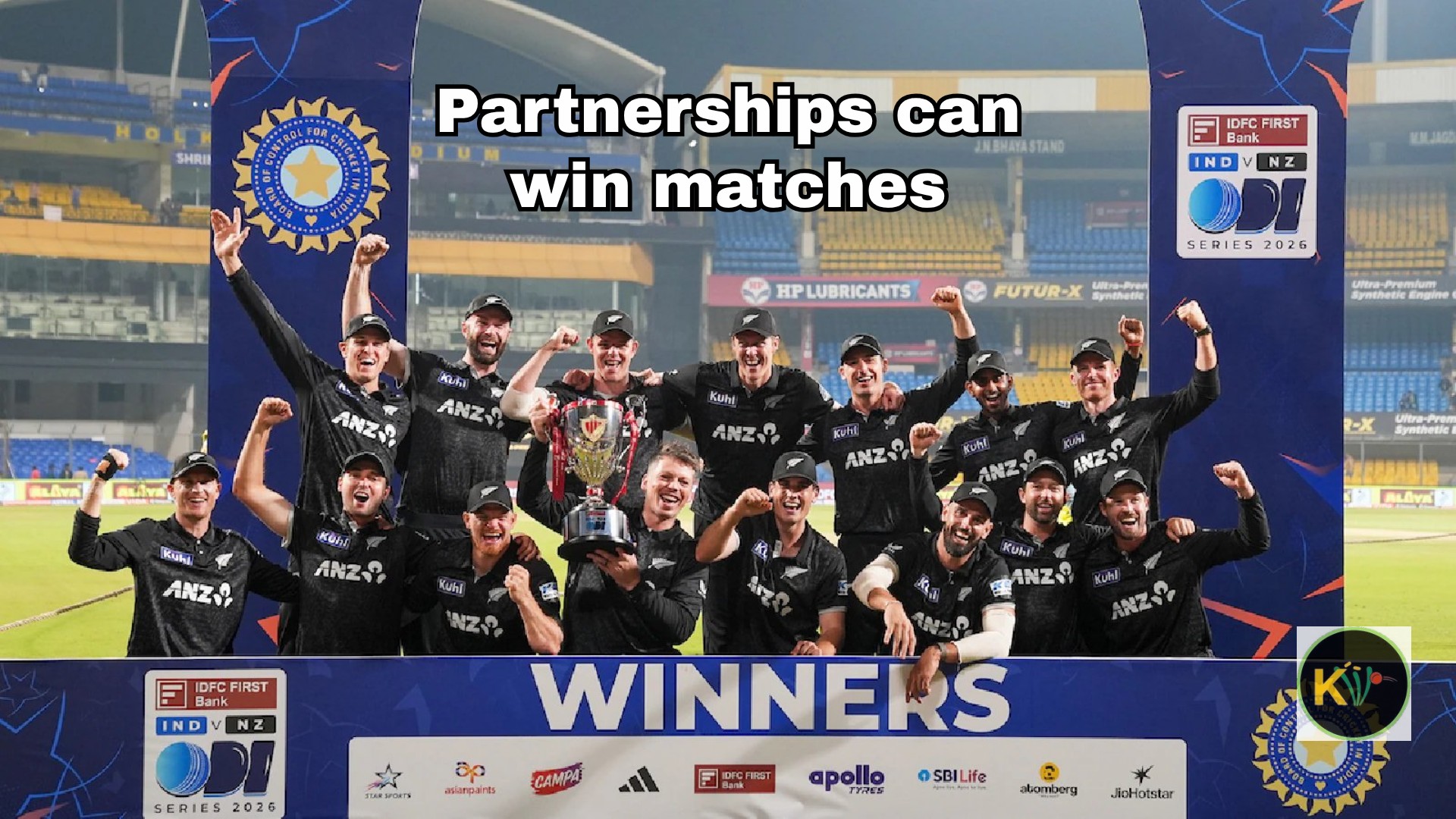

Any cricket fan will enjoy a closely contested match, and the third ODI between India and New Zealand at Holkar Stadium in Indore on January 18, 2026, was a true treat filled with a titanic partnership, a heroic Kohli century, a classic middle-overs battle, and, in the end, a 41-run victory by New Zealand that sealed a historic series on Indian soil. The headline scores (New Zealand 337/8; India 296 all out) tell the story, but the game was won in a few decisions and moments rather than a lengthy sequence of events.
The turning point: the Mitchell–Phillips rescue act

India had New Zealand wobbling early — 58 for 3 — after disciplined new-ball bowling and two good early strikes. Had Kuldeep hit the stumps with a direct throw to get rid of Mitchell, New Zealand would have been in further trouble. What followed was the single decisive passage: Daryl Mitchell and Glenn Phillips putting together a massive 219-run fourth-wicket partnership that moved the game from “India in control” to “New Zealand firmly ahead”. Their partnership erased the early pressure, gave the visitors a psychological victory against India’s attack, and allowed the lower-order batsmen to rotate the strike and then accelerate late without panic. One big partnership can tilt an ODI, and the Kiwis proved it once again in this series.
What made that partnership so vital? Both players complemented each other. Mitchell’s underrated blend of calm timing and placement anchored the innings, while Phillips supplied the fireworks when required. Indian bowlers had their moments of success before and after the stand, but the pair soaked up pressure early and converted it into momentum. By the time India batted, the required run rate and scoreboard pressure were very different from what they would have been if New Zealand had finished around 280–300.
Tactical moves by the captains
After winning the toss, Shubman Gill made a logical decision to bowl first: the Indore pitch had early life, and India wanted to take advantage of home conditions by chasing under lights. The strategy appeared to be successful based on the early strikes and India’s initial command. But New Zealand’s captaincy (on the day Michael Bracewell wasn’t at the helm, the side showed good on-field clarity) focused on patience and backing their middle order. Instead of taking risks with aggressive field shuffles, they had faith in their senior batters to rebuild, and that belief paid off.
India opted for a balanced attack, and Gill made effective use of his seamers early on. India got rewarded with wickets but perhaps misread when to change plans once the Mitchell–Phillips stand had settled. The lack of a bowling change to force a different angle or pace to break that partnership quicker was costly. In the chase, New Zealand persisted with their seam plan and used Jayden Lennox’s accurate off-spin in the middle overs to stem runs—his two overs at a time were tidy and effective—while Zak Foulkes and Kristian Clarke kept striking at the top and back ends. Those bowling moves boxed India into a slow run-rate fight until Kohli tried to take charge.
One underrated performance: Harshit Rana’s two-way contribution

Mitchell and Phillips’ tons and Kohli’s 124 will deservedly take centre stage in match coverage. But Harshit Rana’s performance deserves a mention for fans who like the nuances. He was effective with the new ball, and later in the chase he played a quickfire 52 off 43 that revived India’s hopes when the top order had collapsed. That cameo—played with intent and a clever use of the crease— nearly swung momentum back. Far from being merely a cameo, Rana showed the kind of temperament and utility that make him a genuine all-round asset: he provided early bowling strikes and then came in and tried to finish the game with the kind of aggressive clarity teams need in run-chases. Even if they don’t alter the outcome, contributions like that are crucial in a close series.
Why the result happened: four simple reasons
- The big partnership — As already noted, the 219-run stand was the match’s axis. It turned a potentially defendable total into a daunting one and shifted pressure onto India’s batters.
- Shared bowling contributions from NZ — New Zealand’s bowlers kept chipping in at important times. Zak Foulkes and Kristian Clarke picked up key wickets (three apiece), and Jayden Lennox’s tidy spell kept the middle overs under control. India never had the advantage to start a full-speed chase thanks to their combined efforts.
- India’s slow start in the chase — Losing early wickets in a high chase is always a killer. India’s 71 for 4 meant Kohli had to carry the innings through the worst parts of the scoreboard, and although he produced a magnificent 124, the support around him came in patches rather than as continuous partnerships. The innings needed one or two more substantial stands to get past 338.
- Timing of wickets — New Zealand struck at moments that hurt the most — early in the chase and then again when partnerships threatened. Dismissing Kohli when he had steadied things and taking a couple more quick wickets late (including a crucial catch off Kristian Clarke) prevented India from building a match-winning finish. Those moments were the small gears that locked the final result.
The bigger picture for both sides
For New Zealand, this was a huge statement: to win a bilateral ODI series in India, you have to be patient, adapt to conditions, and back your plans — they did all three. The Mitchell–Phillips partnership will be studied by teams for how to rescue an innings under pressure. For India, the chase and the partnership breakdowns underline a classic issue: relying on one superstar to marshal the chase rarely suffices at the highest level. Kohli’s ton was exemplary, but cricket is a team game — you need consistent contributions across the order to chase 330-plus.
Closing thought
Fans are reminded by games like Indore 2026 why ODI cricket is still so intriguing: one partnership, one tactical change, or one underappreciated cameo can tip the scales. If you watched for the drama, you left satisfied. If you’re an Indian fan, there’s food for reflection — more planning around breaking big partnerships, perhaps, and clearer contingency plans in the field. For neutral cricket lovers, it was simply a reminder that the middle overs are where the modern 50-over game is won and lost.
(Quick score recap: New Zealand 337/8; India 296 all out — New Zealand won by 41 runs to clinch the series 2–1.)