This week:
- Lauren Bell wins #WPL for RCB & for specialist bowlers everywhere!
- Is it time to expand WPL & if so… how?
- Lanning heads to Lancs
- It’s the Super-Scriv-Smash
- Why Sussex’s special measures are a blow to gender equality

This week:
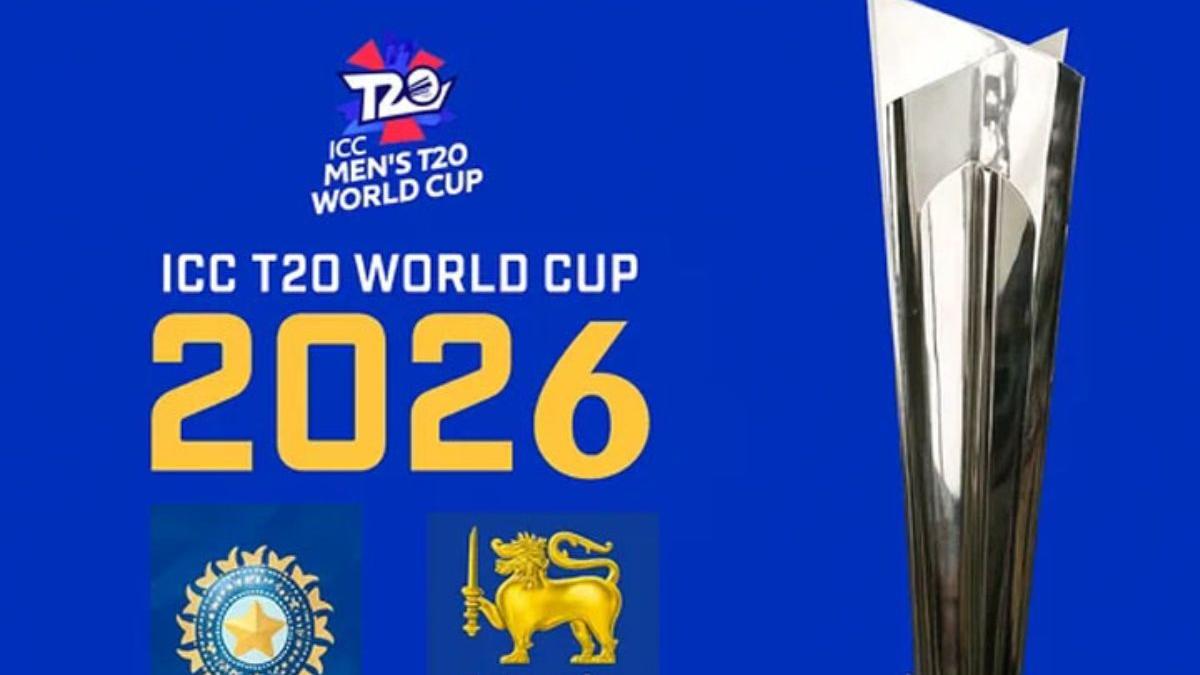
The ICC Men’s T20 World Cup 2026 is set to be one of the biggest cricket events in recent years, with India and Sri Lanka hosting the tournament together. Fans across the globe are eagerly waiting for the full fixtures, group-stage matches, venues, and live streaming details of the mega event. ICC T20 World Cup 2026 Full Fixtures, Groups, Venues, Live Telecast & PDF Download
The tournament will feature 20 international teams, divided into multiple groups during the first round. Each team will aim to secure a place in the Super Eight stage, followed by high-pressure semi-finals and the grand final. With top teams like India, Australia, England, Pakistan, South Africa, and New Zealand in action, the competition promises thrilling encounters.
In this article, we cover everything in one place — complete match structure, expected group format, venues, knockout stages, broadcasting details, and how you can download the T20 World Cup 2026 fixtures in PDF format for offline use.
The tournament will be played in four main stages:
Group Stage
Super Eight Round
Semi-Finals
Final
Each stage is designed to increase competitiveness and ensure that only the most consistent teams reach the knockout rounds.
The group stage will see teams playing round-robin matches within their respective groups. The top two teams from each group will qualify for the Super Eight round. Matches will be spread across iconic venues in India and Sri Lanka, ensuring massive crowd support and electrifying atmospheres.
Round-robin format
Each team plays four matches
Top two teams from each group qualify for Super Eight
Net Run Rate (NRR) will play a crucial role in tie situations
This format ensures that teams must perform consistently rather than relying on one big win.
The Super Eight stage will feature the top eight teams from the group stage. These teams will again be divided into two groups of four.
Here, competition becomes fiercer as:
Every match carries knockout-level pressure
Teams face stronger opposition
One poor performance can end World Cup dreams
The top two teams from each Super Eight group will qualify for the semi-finals.
After the Super Eight stage, the top four teams will advance to the semi-finals. The final match is expected to be held at a marquee stadium in India, making it a historic night for world cricket.
Some of the key stadiums expected to host matches include:
India (5 venues):
Wankhede Stadium, Mumbai
Narendra Modi Stadium, Ahmedabad
Eden Gardens, Kolkata
MA Chidambaram Stadium, Chennai
Arun Jaitley Stadium, Delhi
Sri Lanka (3 venues):
R. Premadasa Stadium, Colombo
Sinhalese Sports Club, Colombo
Pallekele International Stadium, Kandy
Cricket fans worldwide can watch the ICC Men’s T20 World Cup 2026 through official TV broadcasters, digital streaming platforms, and radio partners. The tournament will be available across multiple languages and regions, ensuring complete global coverage.
TV Broadcast: Star Sports Network
Live Streaming: JioHotstar (mobile and web)
Languages: English, Hindi, Tamil, Telugu, Kannada, Bengali, Marathi, Bhojpuri, Haryanvi
Special Features:
TV Broadcast: Dialog TV
Live Streaming: Dialog Play and local digital platforms
Language: Sinhala commentary
Availability: Selected matches on free-to-air channels
TV Broadcast: T Sports, Nagorik TV
Live Streaming: Local digital platforms
Language: Bengali commentary
TV Broadcast: PTV Sports, PTV Home
Live Streaming: Multiple local streaming apps
Language: Urdu commentary available
TV Broadcast: Sky Sports Cricket, Sky Sports Main Event
Live Streaming: Online subscription platforms
Language Options: English and Hindi (selected matches)
Live Streaming: Prime Video
Coverage: All matches including knockouts
Additional Feeds: Select matches with alternate language commentary
TV Broadcast: Dedicated cricket sports channels
Live Streaming: Regional OTT platforms
Extra: Select matches screened in cinemas
Live Streaming: Regional OTT platforms
Languages: English, Spanish, and Portuguese (select matches)
Availability: Regions without official broadcasters
Platform: ICC’s official digital services
Languages: Multiple international commentary options
India: All India Radio (Hindi & English)
United Kingdom: National radio networks
Australia: Sports radio stations
Global: Audio commentary via ICC mobile app
With wide TV coverage, digital streaming access, multiple language feeds, and free options in select regions, the ICC Men’s T20 World Cup 2026 ensures fans never miss a moment—anywhere in the world.
| Date | Time (IST) | Match | Venue |
|---|---|---|---|
| 07 Feb 2026 | 11:00 AM | Pakistan vs Netherlands | SSC, Colombo |
| 07 Feb 2026 | 03:00 PM | West Indies vs Scotland | Eden Gardens, Kolkata |
| 07 Feb 2026 | 07:00 PM | India vs USA | Wankhede Stadium, Mumbai |
| 08 Feb 2026 | 11:00 AM | New Zealand vs Afghanistan | MA Chidambaram Stadium, Chennai |
| 08 Feb 2026 | 03:00 PM | England vs Nepal | Wankhede Stadium, Mumbai |
| 08 Feb 2026 | 07:00 PM | Sri Lanka vs Ireland | R. Premadasa Stadium, Colombo |
| 09 Feb 2026 | 11:00 AM | Scotland vs Italy | Eden Gardens, Kolkata |
| 09 Feb 2026 | 03:00 PM | Zimbabwe vs Oman | SSC, Colombo |
| 09 Feb 2026 | 07:00 PM | South Africa vs Canada | Narendra Modi Stadium, Ahmedabad |
| 10 Feb 2026 | 11:00 AM | Netherlands vs Namibia | Arun Jaitley Stadium, Delhi |
| 10 Feb 2026 | 03:00 PM | New Zealand vs UAE | MA Chidambaram Stadium, Chennai |
| 10 Feb 2026 | 07:00 PM | Pakistan vs USA | SSC, Colombo |
| 11 Feb 2026 | 11:00 AM | South Africa vs Afghanistan | Narendra Modi Stadium, Ahmedabad |
| 11 Feb 2026 | 03:00 PM | Australia vs Ireland | R. Premadasa Stadium, Colombo |
| 11 Feb 2026 | 07:00 PM | England vs West Indies | Wankhede Stadium, Mumbai |
| 12 Feb 2026 | 11:00 AM | Sri Lanka vs Oman | Pallekele International Stadium, Kandy |
| 12 Feb 2026 | 03:00 PM | Nepal vs Italy | Wankhede Stadium, Mumbai |
| 12 Feb 2026 | 07:00 PM | India vs Namibia | Arun Jaitley Stadium, Delhi |
| 13 Feb 2026 | 11:00 AM | Australia vs Zimbabwe | R. Premadasa Stadium, Colombo |
This table covers the official group-stage fixtures that have been released. Further group matches, Super Eight fixtures, and knockout schedule will be added once confirmed by the ICC or you can download pdf below for whole tournament fixtures.
Tickets for many World Cup matches are available online through official outlets like BookMyShow and on venue ticket portals. Prices in India and Sri Lanka are affordable for fans eager to witness the action in person, with some starting at low tiers and premium options for marquee matches like India vs Pakistan.
Several blockbuster clashes are expected to dominate headlines during the tournament, including:
These matches are likely to attract record-breaking TV and digital viewership.
📌 Total Teams: 20
📌 Total Matches: 55 in tournament (including Super Eight and knockouts)
📌 Group Stage: Feb 7–20
📌 Super Eight Stage: Feb 21–Mar 1
📌 Semi-Finals: Mar 4–5
📌 Final: Mar 8
The 2026 T20 World Cup is significant because:
It acts as a transition phase for many teams
Several senior players may play their final T20 World Cup
Young talent will get global exposure
Team combinations ahead of future ICC events will be tested
For teams like India, England, and Australia, this tournament could define their white-ball future.
During the tournament, fans should closely watch:
These factors often decide World Cup outcomes more than star power alone.
The ICC Men’s T20 World Cup 2026 promises high-octane cricket, unforgettable moments, and intense rivalries. With a well-structured format, iconic venues, and global broadcasting, the tournament is set to capture the attention of millions of fans worldwide.
If you’re looking for T20 World Cup 2026 full fixtures, live telecast details, venue information, and a downloadable PDF schedule, this guide covers everything you need in one place
Fans can download the complete ICC Men’s T20 World Cup 2026 schedule in PDF format.
The file includes group-stage fixtures along with Super Eight and knockout round placeholders.
👉 Download T20 World Cup 2026 Schedule PDF
Compared to all other games, cricket has experienced the most changes to its rules and structure. From timeless Test matches to one-day matches to T20 matches and now the evolving T10 format, the reasons for this evolution are many and varied. While purists continue to revere the five-day Test matches as the ultimate form of the game, the growing trend of Test matches concluding within four days in recent times prompts the question: Are 5-Day Test Matches on the verge of extinction?

The future of Test matches is uncertain due to several factors, including people’s busy lives, a lack of interest in longer versions of the game among children, and the fact that broadcast economics favours shorter formats that provide faster entertainment. The quality of Test matches has significantly declined since the bilateral test series was cut and replaced with the T20 and ODI series. Because T20 matches are more glamorous and commercially explosive and attract more corporate and fan attention, they have become more popular than ODIs.

Leagues such as IPL, BBL, PSL, and SA20 have grown into billion-dollar ecosystems, further aggravating the frustration of Test enthusiasts. The shorter format of the game, T20 cricket, attracted young cricketers due to its higher pay. More than ever before, being a part of an Indian Premier League side became the ultimate goal of any Indian cricketer. Batsmen learnt to play innovative shots to dodge dot balls, while bowlers learnt to create them. These changes diminished the depth of Test teams’ bench and rendered young cricketers unsuited for the longer form of the game.

Test cricket suffered as a result of the popularity of shorter versions of the game. False shots became the norm as batsmen began to score rapidly, making it simple for bowlers to take wickets. Batsmen lacked the temperament to play long innings, bowlers lacked the discipline and endurance to bowl long spells, and captains lacked the strategy to make the opposition batsmen make mistakes.

All these factors, along with innovations such as the introduction of the pink ball for day-night Test cricket and the use of questionable quality pitches (understood only by the groundsmen), made life harder for modern Test players and revealed their vulnerabilities.
Reducing Test matches to four days has already been discussed, and given how ODIs gained popularity after the overs were cut from sixty to fifty, this may not be a poor idea. Some cricket fans even contend that changing the duration undermines the essence of Test cricket, indicating that not all cricket fans embrace change. But adaptations are often necessary for survival.
Although it is changing, five-day Test cricket is not becoming extinct. Even if Test cricket isn’t as popular as it once was, any cricket player’s ultimate goal is to play a Test match for their country, and a player’s brilliance is only determined by how well they perform in the Test arena. Test cricket’s continuation is secondary; the preparedness of fans, boards, and broadcasters to protect it is what truly matters. They have a greater obligation to ensure the preservation of this most authentic form of cricket.

Most clubs rely on fundraising in bursts. A race night here, a raffle there, maybe a sponsored event once a season. These can work well, but they also take time, planning, and volunteer energy, and once they’re over, the income stops.
That’s why more clubs are looking at a different approach: turning members into monthly supporters.
Not by asking for more money, but by offering an easy, ongoing way for people who already care about the club to support it consistently.

In his 8th Test, Zak Crawley scored 267. By himself.
Ollie Pope was the Player of the Match in South Africa in just his 6th Test, scoring 135* and taking six catches.
Jamie Smith took Test cricket by storm with scores of 70, 95, 111, 67, 89, 40, 44*, 184, 88, 51 in his first year, batting in the lower order.
Ben Stokes once scored 258 runs at 130.3 SR in South Africa. On a good, he wins you Test matches single-handedly. On a great day, he wins you World Cups.
Harry Brook is already England’s next big start with 10 tons at 26, and Ben Duckett pioled up 462 runs against India not too long ao.
England don’t lack talent. This batting line up is designed to look unbeatable on their best days.
The problem is…this team is built only for those days. At the slightest hint of discomfort, it falls apart.
Embed from Getty Images
I have been trying to build habits for the last couple of years: going to the gym, eating healthy, reading. Some stick. Most vanish within a few months.
It finally dawned on me why I was not consistent. I was trying to optimize for my ideal day—getting up early, meditating, coming home, hitting the gym, cooking, writing, reading, all while sleeping at a reasonable hour.
The moment I stayed a little later at work, my ideal day completely fell apart. Come home, eat junk, watch TV, go to sleep.
This reminded me of a point James Clear from Atomic Habits highlighted on the Huberman Lab podcast last week:
“Don’t have enough time? Do the short version. Don’t have enough energy, do the easy version. Find a way to show up, not put up a zero for that day because doing something is almost always infinitely better than doing nothing.”
England optimized for their peak. On their best days, they could chase record 4th innings totals. On their worst, they simply didn’t show up.
Also Read: What is Bazball? The Official Definition of Bazball is…
Embed from Getty Images
In the first two Tests, England lasted just 32.5, 34.4, 76.2, and 75.2 overs. The Ashes was lost then and there.
Ben Duckett managed only 221 balls across all ten of his innings.
Zak Crawley was dismissed in the first over three times, and twice more within the first five. Even though he had a couple of decent innings later, the opening partnership never gave England enough time at the crease.
Ollie Pope started positively but was dropped after the 3rd Test, having survived just 189 balls at an average of 20.83.
Jamie Smith’s horrendous shot, Will Jacks’ dropped catch, the list goes on. At least Stokes fought, but even he ended up a walking wicket by the end of the series.
Embed from Getty Images
This was supposed to be the worst Australian team of the decade. And maybe it was. No Hazlewood, Cummins barely played, Lyon hobbled out of the series.
And yet, they still found a way to get the job done.
In the first Test, Australia were 83/6. Carey and Starc did the bare minimum and hung around for 35 runs to take the total to 132. Enough to swing momentum back to Australa.
Weatherald and Labuschagne did not set the series on fire. Yet they batted 288 and 404 balls respectively. On his worst days, Labuschagne took screamers at slip and plucked wickets before lunch bowling his Dibbly Dobblies. Khawaja, out of form, batting out of place, sidelined by golf injury & controversy, with risk of a mid-series career-end, came back to score crucial knocks of 82 & 40 at Adelaide.
Even Scotty Boland wasn’t at his accurate best, yet he and his fellow 35-year old pacers, Neser and Starc, maintained their fitness level and discipline through the series.
Add in-form players, Mitchell Starc, Steve Smith, Alex Carey, Beau Webster, and Travis Head, and you’ve got a world-beating, Ashes-conquering side.
Commentators say Australia won the ‘big moments.’ I say, they just did the bare minimum, and England crumbled under pressure.
The Australian Test team managed to show up. They did not put up a Zero even on their worst days.
Embed from Getty Images
It is easy to criticize this England side through the lens of recency bias.
England’s peak from 2010-12 was built on a simple formula: The grit of Cook-Strauss-Trott at the top, with the KPs and Bells to capitalize further down. It worked brilliantly.
In the following decade, England tried to replicate this strategy without much success. Stoneman, Carberry, Compton, Lees, Hameed, Malan, Vince, Sibley, Denly, Burns. A revolving door with the same result.
And so, the pendulum swung the other way. England overcorrected.
Fortune favors the brave. Eoin Morgan showed it can be done in limited overs cricket, so why not try that out? Surely, it can’t be any worse than 68/10 at MCG in 2022, right?
Embed from Getty Images
So, where do England go from here?
The easy answer: England needs more Joe Roots, players who can adapt to Bazball on their best days, but have an inner Cook-ball when the situation demands.
But that’s easier said than done. County Cricket does not produce dozens of Joe Roots anymore.
What England need is an insurance policy. A compromise blending the old and the new. Think Sehwag-Dravid, Smith-Amla, Langer-Hayden, Fleming-Astle, partnership-builders alongside dominators.
Even when Crawley scored 267, Burns and Sibley had dented the swing threat for 27 balls. When Pope scored 135, Joe Denly batted exactly 100 balls, Sibley 95, and Crawley scored 44 (137). Stokes, meanwhile, had the advantage of a 55.3-over old ball when he came in to bat before his 258.
A strong batting line-up needs all sorts of characters.
I am not suggesting that England go back to Sibley-Burns. That experiment has failed, but the Crawley-Duckett-Pope experiment has not delivered either.
Crawley averages 31.98 in FC cricket, 31.18 in Test cricket, 32.22 in the preceding India series, and 27.30 in the Ashes. Is that the standard England want to settle for? Is flamboyance more important than victories?
Also Read: Ranking England’s 65 Greatest Cricketers of All Time (Men’s)
Embed from Getty Images
On the TalkSport podcast, host Jon Norman asks Jarrod Kimber and ‘Bumble’ a deceptively simple question, “Why is that England don’t maintain their success for long?”
Apart from the 1950s, there is not a single period of Test cricket dominance in their cricketing history unlike the West Indies of the 80s, Australia of the 2000s, or the current Indian age. They show glimmers of brilliance—think Ashes 2005, the 2010-12 era, and the early days of Bazball.
The pattern is clear: England’s peaks come when everything falls into place, but they lack a backup plan on their ‘bad days.’ As James Clear says,
“In a lot of ways, the bad days are more important the good days…What can I stick to even on the bad days, and that becomes the baseline. That’s where you start from, and then on the good days, you have got capacity to go ahead and ramp it up.”
High ceilings are useless without a floor, and that is why long-term success has always eluded them. Hopefully, England management recognizes this and can harness the talents of Jacob Bethell, Asa Tribe, and James Rew to build that floor for future Test dominance.
****
On a personal note, this year I am optimizing my schedule for non-ideal days. Too early to say if this system is working better to build habits, but I am definitely more consistent now than without this mindset.
Thank you for reading.
BCD#407 © Copyright @Nitesh Mathur and Broken Cricket Dreams, LLC 2023. Originally published on 01/16/2026. Unauthorized use and/or duplication of this material without express and written permission from this site’s author and/or owner is strictly prohibited. Excerpts and links may be used, provided that full and clear credit is given to Broken Cricket Dreams with appropriate and specific direction to the original content (i.e. linked to the exact post/article).

3 minute read
Afghanistan’s Rahmanullah Gurbaz was already more than a match for most bowlers back when he tried to scythe every single delivery through point for four. Recent evidence suggests he’s consulted his protractor and supplemented that angle with a couple more. Further explorations in geometry could get very messy indeed for his opponents.
Way, way back in the Scotch mists of time – barely discernible now that so many other world tournaments have been and gone to wash more ancient memories away – Rahmanullah Gurbaz made 80 off 57 balls against England to secure a supposedly memorable victory for his team at the 2023 World Cup.
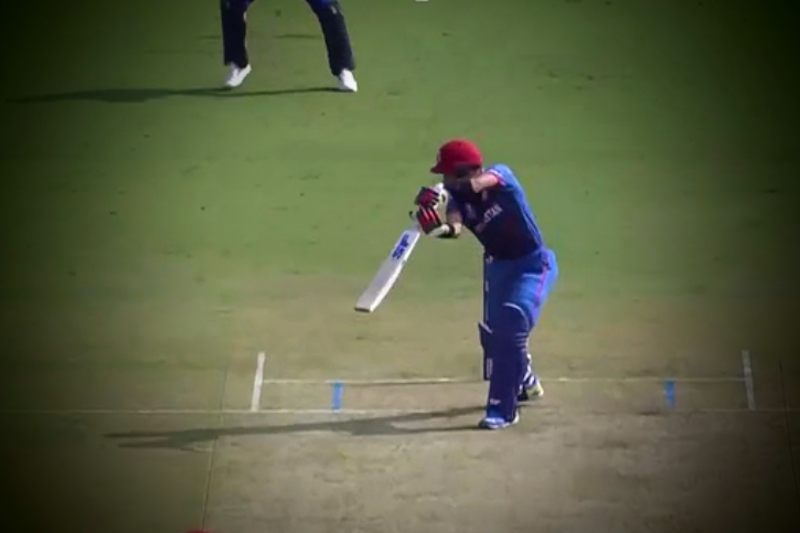
On that occasion, England’s bowlers belatedly worked out that if you bowl outside off stump to Gurbaz with fewer than seven point fielders, he’ll unfailingly carve you for four. So they started bouncing him. And he responded by hooking them for six.
Clamping down on an apparent strength can backfire if the batter is so good that what appeared a strength is in fact no such thing. We’re starting to wonder whether having Rahmanullah Gurbaz carve you through point for four is actually the least bad option.
His first scoring shot against South Africa was a four through the covers. A short while later, he hit upon the idea of hitting a little straighter and considerably higher.

As he made his way to 84 off 42 balls, this became his most important shot, supplemented by the fallback option of hitting a six over third if the ball was shorter.
Just as he had against England, Gurbaz was peppering the off side boundary – but on this occasion with the very conspicuous exception of point.

Not only that, but cast your eye to the other half of the field and this is a very weird T20 wagon wheel with only one shot at even faint risk of clipping a cow grazing in its designated corner.
Afghanistan’s coach, Jonathan Trott, top-scored for England in the infamous 2009 defeat at Centurion when Graeme Smith and Loots Bosman went full bovine (Smith was eventually caught at long on, Bosman at deep midwicket) – maybe he’s inculcated in his charges a strong aversion to that quadrant.
Gurbaz wasn’t finished anyway. Rather unusually for a T20 game, he actually played three innings against South Africa.

After scoring a single off the only ball he faced in the first Super Over, our man walked out for the third and final time with Afghanistan needing the small matter of four sixes off four balls in the second Super Over.
Implausibly, he hit three in a row, before – even more incredibly – leaving the fourth delivery.
He didn’t leave it for no reason, of course, and it was duly called a wide. What would this madman do with the crucial extra delivery?
He sliced it straight to a fielder… at point.
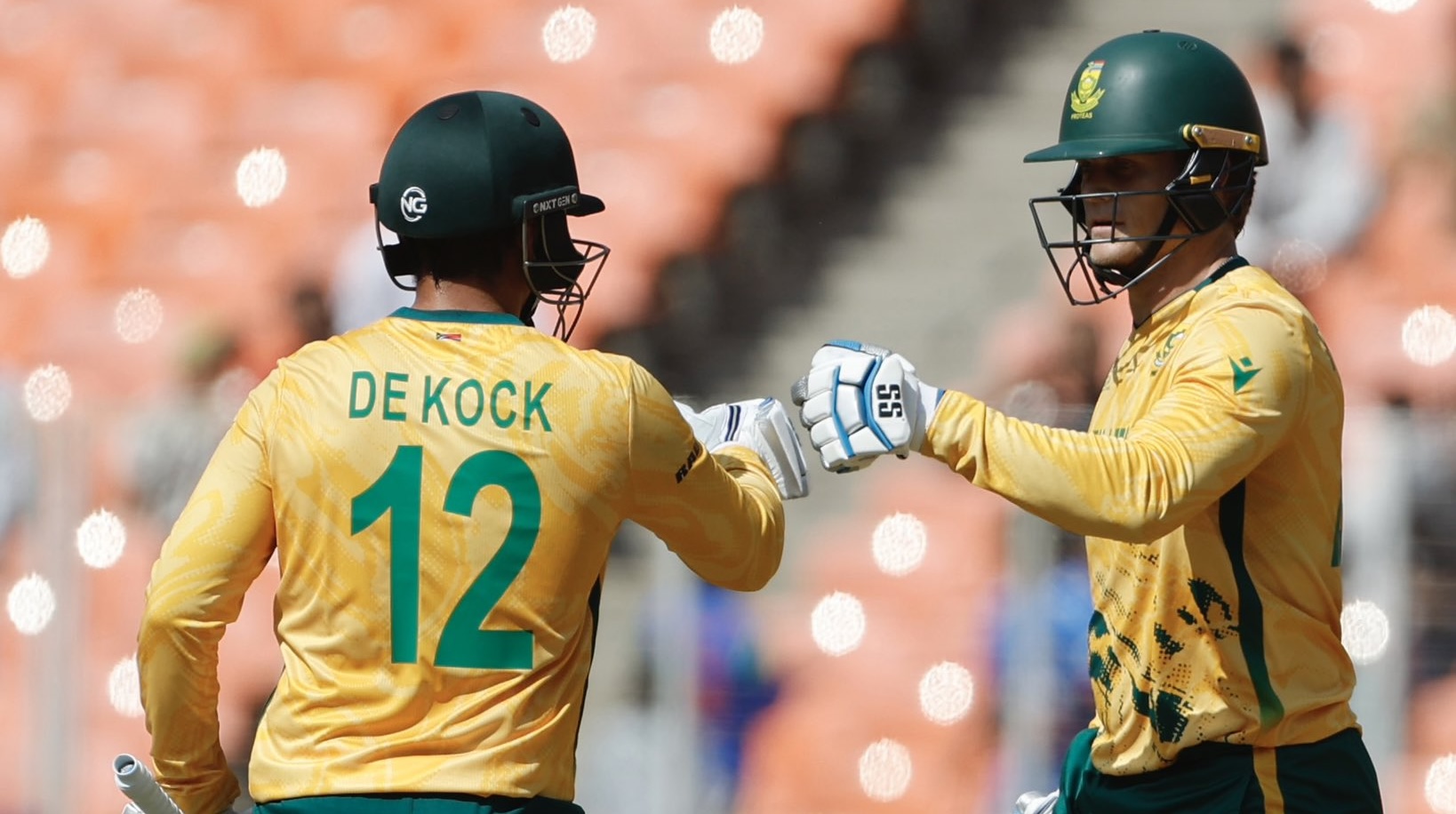
It was quite the comedy of errors, as the T20 World Cup delivered us one of the most entertaining contests that will go down in history today in Ahmedabad.
Rashid Khan won the toss, and let the Proteas in to bat at his IPL home ground.
Fazalhaq Farooqi began well, as Aiden Markram struggled for timing. The South African captain fell in the third over, but following a relatively sedate Powerplay, Quinton de Kock and Ryan Rickelton stepped on the gas.
Both the left-handed wicketkeeper-batters put on a show with several boundaries and sixes off the strong Afghan spin attack. Noor Ahmed was taken for 23 runs in his first over, and the duo added 114 runs between them.
But it was the man of the moment, Rashid Khan, who had the last laugh. He had de Kock holing out to deep midwicket, and Rickelton trapped plumb in his third over. Soon after, Dewald Brevis and David Miller couldn’t quite get it going. After a few quiet middle overs, Brevis was the next to go. Azmat Omarzai would get a second wicket when Tristan Stubbs scooped to short fine leg.
Fortunately, David Miller and Marco Jansen managed 28 from the final 2 overs, and SA had 187/6 at halftime. Around the 12th over, 200 looked reachable, but Afghanistan managed to pull things back brilliantly.
Afghanistan’s chase got off to a bright start, as Rahmanullah Gurbaz punished Lungi Ngidi and Marco Jansen in the first couple of overs. Ibrahim Zadran joined the fun when George Linde was introduced, but Ngidi returned to strike twice in the 5th over to jolt the momentum.
Kagiso Rabada created more problems, as Sediqullah Atal was out caught, but Darwish Rasooli proved a competent partner for the big-hitting Gurbaz.
As much as SA created pressure, Gurbaz was on a roll, especially against spin. He was relatively more careful against Maharaj, but Linde and Markram got their share of tap.
However, a brilliant grab from Linde at short third would once again open the floodgates. Rasooli got run out, and Mohammed Nabi gave a catch to Markram at point, making Afghanistan 6 down.
The game once again twisted and turned, with a couple of cameos from Azmat Omarzai and Rashid Khan bringing the Afghans close, but the best was saved for the last. Noor Ahmed sprang a surprise with a six off his first ball, and another in the final over, after capitalizing on a couple of no-ball reprieves from Rabada.
Afghanistan had it nearly in the bag, but Fazalhaq Farooqi was run off from the free-hit, tying the game and forcing a super over.
Lungi Ngidi, the star of the show among SA’s bowlers, got hit for 17 in the first Super Over. Azmatullah was clutch with his boundaries, and the Proteas were on the ropes once again.
But it was far from over. Farooqi had to defend 18 runs to win the game for the Afghans. A six from Dewald Brevis, followed by a four and a last-ball six from Tristan Stubbs ensured that another Super Over would happen.
This time around, there was no messing around. Stubbs began with a six over deep midwicket, but David Miller landed the telling blows on the 4th and 5th deliveries. It was 24 to defend, and the Proteas opted for Keshav Maharaj to do the honors.
Mohammed Nabi holed out to long-on after a swing and a miss, but that wasn’t the end of that. Gurbaz came in and smashed a hat-trick of sixes to potentially achieve the unthinkable. Maharaj bowled a wide under massive pressure, but the final delivery spelled a win for the men in green and gold, as the Afghan keeper picked out point.
What an absolute thriller of a game this was, and even Shakespeare couldn’t have written a better script.
SA 187/6 in 20 overs (Rickelton 61, de Kock 59 – Azmat Omarzai 4-0-41-3, Rashid Khan 4-0-28-2)
AFG 187 all out in 19.5 overs (Gurbaz 84 – Ngidi 4-0-26-3)
AFG 17/0
SA 17/1
SA 23/0
AFG 19/2
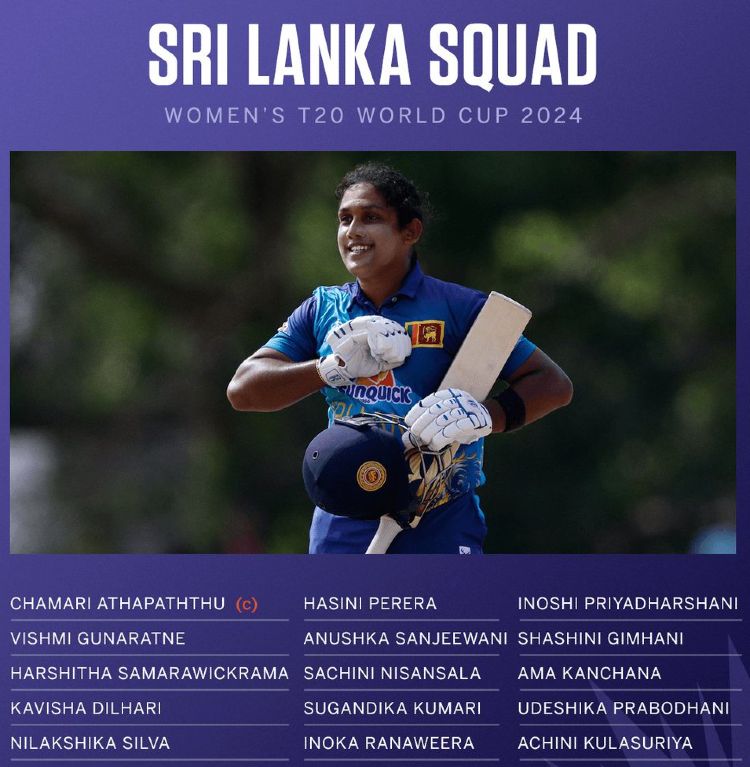
Sri Lanka women have named their 15 member squad for the upcoming T20 Women’s World Cup 2024 scheduled to be held in UAE in October.
Veteran left-arm orthodox spinner Inoka Ranaweera has been included for the mega event. The squad will be captained by Chamari Athapaththu.

They are in Group A alongside India, Australia, Pakistan and New Zealand respectively. Sri Lanka Women will start their campaign against Pakistan on October 3.
Kaushini Nuthyangana will be travelling as reserve player.
Sri Lanka Women T20 WC squad 2024
Chamari Athapaththu (c), Harshitha Samarawickrama, Vishmi Gunaratne, Kavisha Dilshari, Nilakshi de Silva, Hasini Perera, Anushka Sanjeewani (wk), Sachini Nisansala, Udeshika Prabodhani, Inoshi Priyadharshani, Achini Kulasuriya, Inoka Ranaweera, Shashini Gimhani, Ama Kanchana & Sugandika Kumari
Travelling reserve: Kaushini Nuthyangana


Sat, Feb 14, ’26
All-rounder Deandra Dottin is set to make a return to the West Indies team for their three-match One Day International series against Sri Lanka, which will be hosted at Grenada’s National Cricket Stadium in St. George’s, from February 20 to 25.
Dottin last featured for the Caribbean side in their home white-ball series against Bangladesh in January 2025 before sustaining an injury six weeks later in India’s Women’s Premier League, which kept her out of action for the remainder of the year, including Windies’ failed quest to advance to the 2025 ODI Women’s World Cup through the qualifying tournament.
West Indies Women’s ODI Squad:
Hayley Matthews (c), Chinelle Henry (vc), Aaliyah Alleyne, Shemaine Campbelle, Jahzara Claxton, Deandra Dottin, Afy Fletcher, Jannillea Glasgow, Realeanna Grimmond, Shawnisha Hector, Qiana Joseph, Ashmini Munisar, Karishma Ramharack, Shunelle Sawh, Stafanie Taylor
Skipper Hayley Matthews, who delayed surgery to an injured shoulder until West Indies’ idle international period, has also recovered in time for the series. Meanwhile, all-rounder Chinelle Henry has been appointed vice-captain, a signal of Henry’s “growing leadership qualities,” according to Cricket West Indies.
CWI Director of Cricket Miles Bascombe expressed gratitude to wicketkeeper Shemaine Campbelle. “We are thrilled to have Chinelle Henry as our new vice-captain to support captain Hayley Matthews in leading the side and express our thanks to Shemaine Campbelle, who previously held the vice-captaincy,” he said.
Veteran Stafanie Taylor, who missed the T20I leg of South Africa’s tour of the Caribbean last summer, is also fit again. Meanwhile, all-rounder Shawnisha Hector, who was Taylor’s injury replacement, retains her place in the squad.
Uncapped wicket-keeper batter Shunelle Sawh has earned another international call-up, with all-rounder Zaida James, who had an injury-interrupted regional season, being left out.
Head Coach Shane Deitz says his team has a score to settle with Sri Lanka. “They beat us in the ODI series in Sri Lanka back in 2024, so we owe them one, and now we get them on our home turf,” he said.
“We’re looking forward to a brilliant series against a team currently ranked higher than us in ODIs, so it’ll be tough and hard fought. The girls are excited about competing, putting on a good show and playing some great cricket for all our fans here in the Caribbean.”
Sri Lanka are ranked 6th in ODIs, while the West Indies are ranked 9th.
Series Schedule: (All matches will be played at the National Cricket Stadium)
1st ODI – Friday, February 20 – 9:30 AM
2nd ODI – Sunday, February 22 – 9:30 AM
3rd ODI – Wednesday, February 25 – 9:30 AM
1st T20I – Saturday, February 28 – 1PM
2nd T20I – Sunday, March 1 – 1PM
3rd T20I – Tuesday, March 3 – 1PM
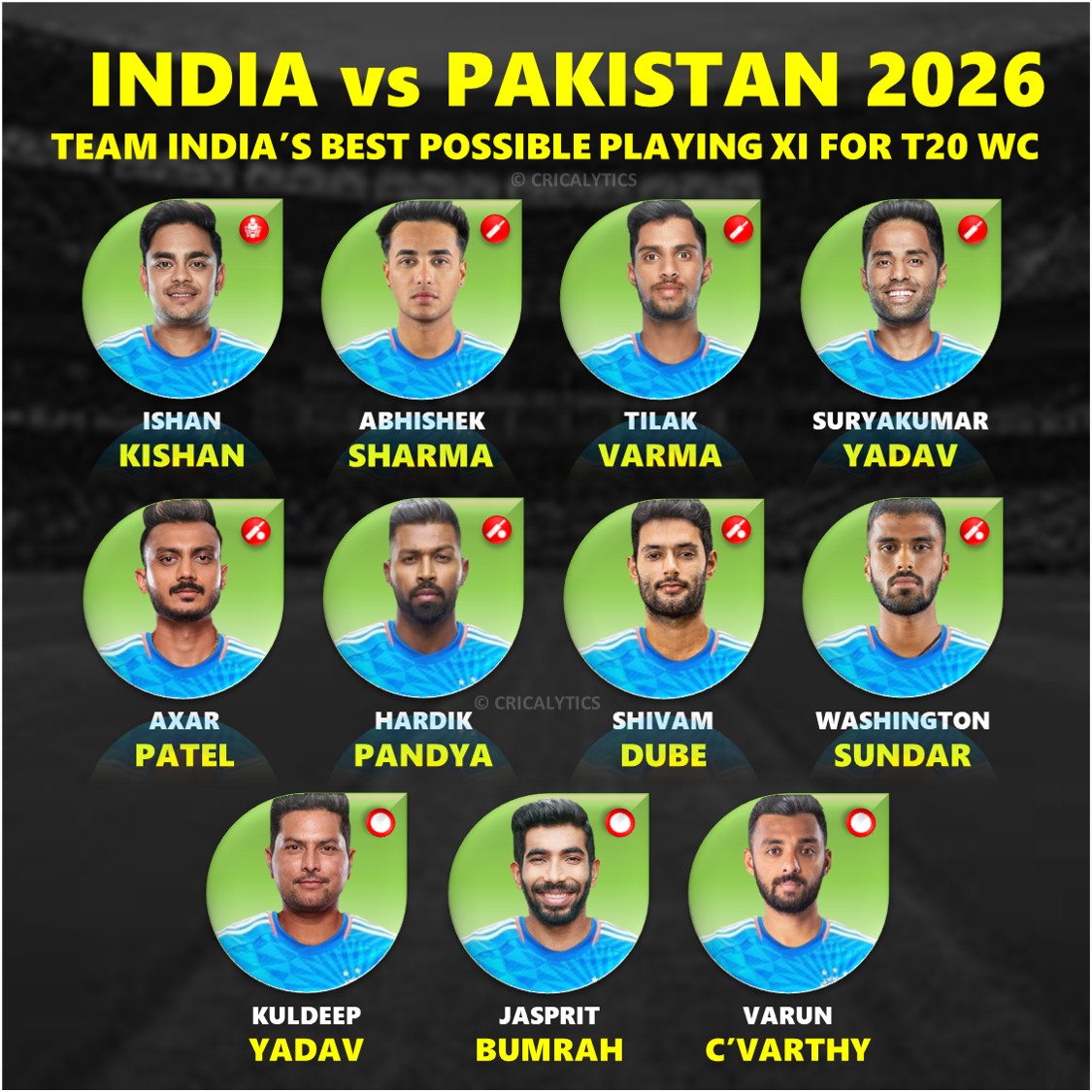
With Abhishek Sharma expected to return, discover the best playing 11 for India vs Pakistan El Clasico clash of the T20 World Cup 2026.
Two wins from two matches, and Team India’s T20 World Cup 2026 campaign is off to an excellent start. While the margins of victory may not have appeared overwhelmingly dominant, that perception stems largely from the exceptionally high standards this team has set for itself. India have grown accustomed to controlling matches comprehensively, to the extent that even a brief mini-collapse of two or three wickets in quick succession is viewed as an anomaly.
Team India’s batting appeared slightly unsettled in the opening two matches, which is not uncommon in a high-stakes global tournament. Unlike bilateral series, the T20 World Cup demands precision under sustained pressure, where even minor lapses are magnified. While it would be premature to question India’s aggressive batting approach at this stage, the first two fixtures have offered a subtle reminder of how slim the margin for error can be – even against comparatively lower-ranked opponents like the USA and Namibia.
Having said that, this is a group that has repeatedly proven its ability to handle high-pressure situations, and as the T20 World Cup 2026 progresses, the team is only likely to grow sharper and more cohesive. The sheer depth and quality of India’s batting lineup leave little reason for long-term concern, especially given the trust they have justified in previous global tournaments. Importantly, the bowling attack continues to remain India’s strongest weapon – a unit that has consistently delivered under pressure and turned games in critical moments.
Tournament Details: T20 World Cup 2026
Match Details: India vs Pakistan Group Stage
Where: Colombo, Sri Lanka
When: February 15, 7 pm IST
Now then, India’s next assignment is undoubtedly the most high-profile fixture of the tournament – at least from a global viewership standpoint. The much-anticipated clash against Pakistan has generated significant pre-match discussion, particularly after reports of concerns raised by Pakistan’s authorities and team management boycotting the match against India. However, following firm communication and regulatory sanctions from the International Cricket Council, Pakistan confirmed their participation, putting an end to speculation.
Both India and Pakistan have secured victories in their opening two matches and are virtually assured of a spot in the Super 8 stage of the T20 World Cup 2026. While qualification pressure may be minimal, that very freedom adds another layer of intrigue to this high-voltage encounter. Often dubbed the El Clásico of international cricket, this fixture carries immense prestige, momentum value, and global attention. With both teams boasting strong spin arsenals, the middle-overs strategy could prove decisive in shaping the outcome. The big question now is: what will be the ideal playing 11 combination for the India vs Pakistan clash at the T20 World Cup 2026? Let’s break it down.
Batters
WKs
All-rounders
Bowlers
The biggest selection dilemma in the India camp ahead of the Pakistan clash revolves around the fitness of Abhishek Sharma. The left-hander missed the previous fixture against Namibia due to an upset stomach, raising concerns about his availability for the high-stakes encounter. However, teammate Varun Chakravarthy has since indicated that Abhishek looks fit and is expected to be available for selection against Pakistan. If Abhishek regains his place in the playing XI, Sanju Samson may likely have to make way.
The second major tactical call for the India management will revolve around their spin combination for the Pakistan encounter. With Sri Lankan surfaces playing noticeably slower and the larger ground dimensions offering assistance to spinners, conditions have clearly favoured teams willing to stack their bowling attack with slow options. Notably, Pakistan, who are playing all their matches in Sri Lanka, have consistently fielded five to six spin-bowling options to exploit these conditions.
If Team India adopt a strict horses-for-courses approach, including Washington Sundar and Kuldeep Yadav would be a logical tactical adjustment. Sundar could provide additional batting depth while also offering a powerplay spin option, especially if the management feels the need to rest or rotate Rinku Singh, who has looked slightly out of rhythm in the opening games. His ability to bowl tight overs with the new ball could be particularly effective on slower Sri Lankan surfaces.
Similarly, bringing in Kuldeep in place of Arshdeep Singh may strengthen India’s middle-overs control. On slow and low pitches, Kuldeep’s variations and wrist-spin could be difficult to attack, especially with the larger ground dimensions reducing boundary opportunities. In conditions favouring spin, such adjustments could significantly tilt the balance in India’s favour for this high-stakes T20 World Cup 2026 clash.
Batters
Wicket-Keepers
All-Rounders
Bowlers
So, that’s about the best playing 11 combination for India vs Pakistan clash in the T20 World Cup. Will India make it 8-1, or will Pakistan make a spin-dent in Team India’s batting lineup? It will once again be an interesting match. But the success of this match for Pakistan will mostly depend on their batting. Pakistan’s major drawback is their batting, and if they can overcome India’s strong bowling lineup, they can actually be competitive.
ALSO READ: Explained: Team India Players Annual 2026 Salary Contract List
Thanks for reading! Looking at the squad of both teams, what’s your best playing 11 for India vs Pakistan T20 World Cup 2026? Please email your thoughts to business@cricalytics.com.
© AK4Tsay1 Cricalytics